
March 17, 2026 | 1 pm ET
Register NowIEN Members are invited to join us for an interactive, collaborative community conversation on fiduciary duty and climate justice. This session will feature Professor Emerita Susan Gary discussing the evolving nature of fiduciary standards, intergenerational equity, and the intersection of climate justice with long-term institutional stewardship.
The fiduciary duty case for climate justice is compelling: climate risks represent both a systemic investment threat and a legal obligation for fiduciaries who must protect long-term value creation. This call follows presentations at IEN's 2025 Annual Forum on the intersections of fiduciary duty, systems-level thinking, and climate justice.
We will convene practitioners of systems-level thinking, allocators prioritizing both climate justice and fiduciary duty, and impact and sustainable investing professionals to identify challenges in integrating climate justice lenses into endowment and foundation portfolios. We will also share key resources from partners in the space on building consensus, establishing priorities, and integrating diverse perspectives into all parts of the investment process.
Related Resources
📄 Briefing Paper: The Fiduciary Duty Case for Climate JusticeFeatured Speaker
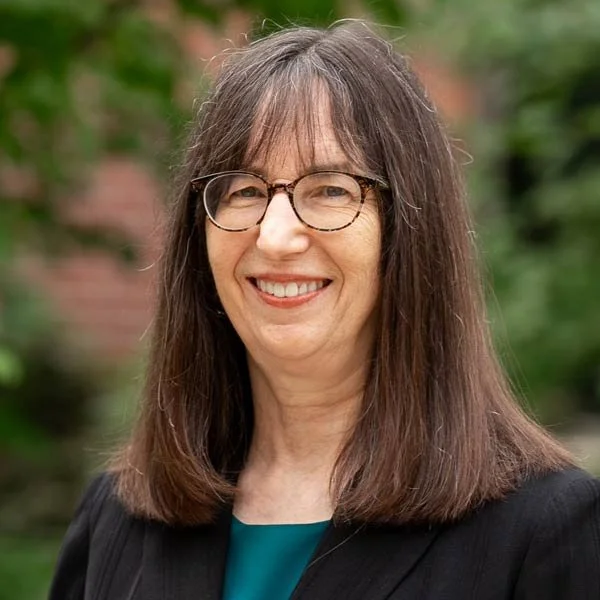
Susan N. Gary
Professor Emerita
University of Oregon School of Law
In this session, Professor Gary will discuss: The dynamic nature of fiduciary standards and how prudence evolves with changing knowledge and circumstances. She'll explore the duty of impartiality for institutions operating in the long term, intergenerational equity concerns for university endowments, and how investors today both face systemic risks and have influence over systemic market factors in ways they did not in the 1970s. Her remarks will draw from a new chapter she co-authored with Keith Johnson and Tiffany Reeves for the Handbook of Systems Level Investing.
Susan N. Gary, Professor Emerita and formerly Orlando J. and Marian H. Hollis Professor at the University of Oregon School of Law, received her B.A. from Yale University and her J.D. from Columbia University. Before entering academia, she practiced with Mayer, Brown & Platt in Chicago, and with DeBandt, van Hecke & Lagae in Brussels. Professor Gary has taught trusts and estates, estate planning, estate and gift tax, nonprofit organizations, and an undergraduate course on law and families. In 2025, she taught Law and Wealth Management as a visiting professor at the University of Hong Kong.
She has written and spoken about the regulation of charities, fiduciary duties including the prudent investor standard, stewardship trusts and purpose trusts as a new form of business ownership, the definition of family for inheritance purposes, donor intent in connection with restricted charitable gifts, and the use of mediation to manage conflict in the estate planning context. She served as a trustee on the University's Board of Trustees.
Professor Gary is an Academic Fellow and former Regent of the American College of Trust and Estate Counsel and served on the Council of the Real Property, Trust and Estate Section of the American Bar Association. She served as the Reporter for three projects of the Uniform Law Commission: the Uniform Electronic Wills Act, the Uniform Prudent Management of Institutional Funds Act, and the Model Protection of Charitable Assets Act. She was a member of the steering committee of the Intentional Endowments Network and continues to serve on its Fiduciary Investment Committee.
Significant recent articles include "The Changing Landscape of Business Succession: How and Why Purpose Trusts Matter," 18 Ohio State Bus. L. J. 41 (2024), "Best Interests in the Long Term: Fiduciary Duties and ESG Investing," 90 Univ. of Colorado L. Rev. 731 (2019), and "The Oregon Stewardship Trust: A New Type of Purpose Trust that Enables Steward-Ownership of a Business," 88 Univ. of Cincinnati L. Rev. 707 (2019). They are available on SSRN: https://papers.ssrn.com/sol3/cf_dev/AbsByAuth.cfm?per_id=557612.
This call is a part of IEN's Fiduciary Duty for Climate Justice Initiative. This resource was developed in collaboration and consultation with IEN's Climate Justice Task Force, a group dedicated to advancing a just transition to an equitable, low-carbon, regenerative economy.